The Frame Shop Quoted Me $180 for One Photo. Here's What I Did Instead.
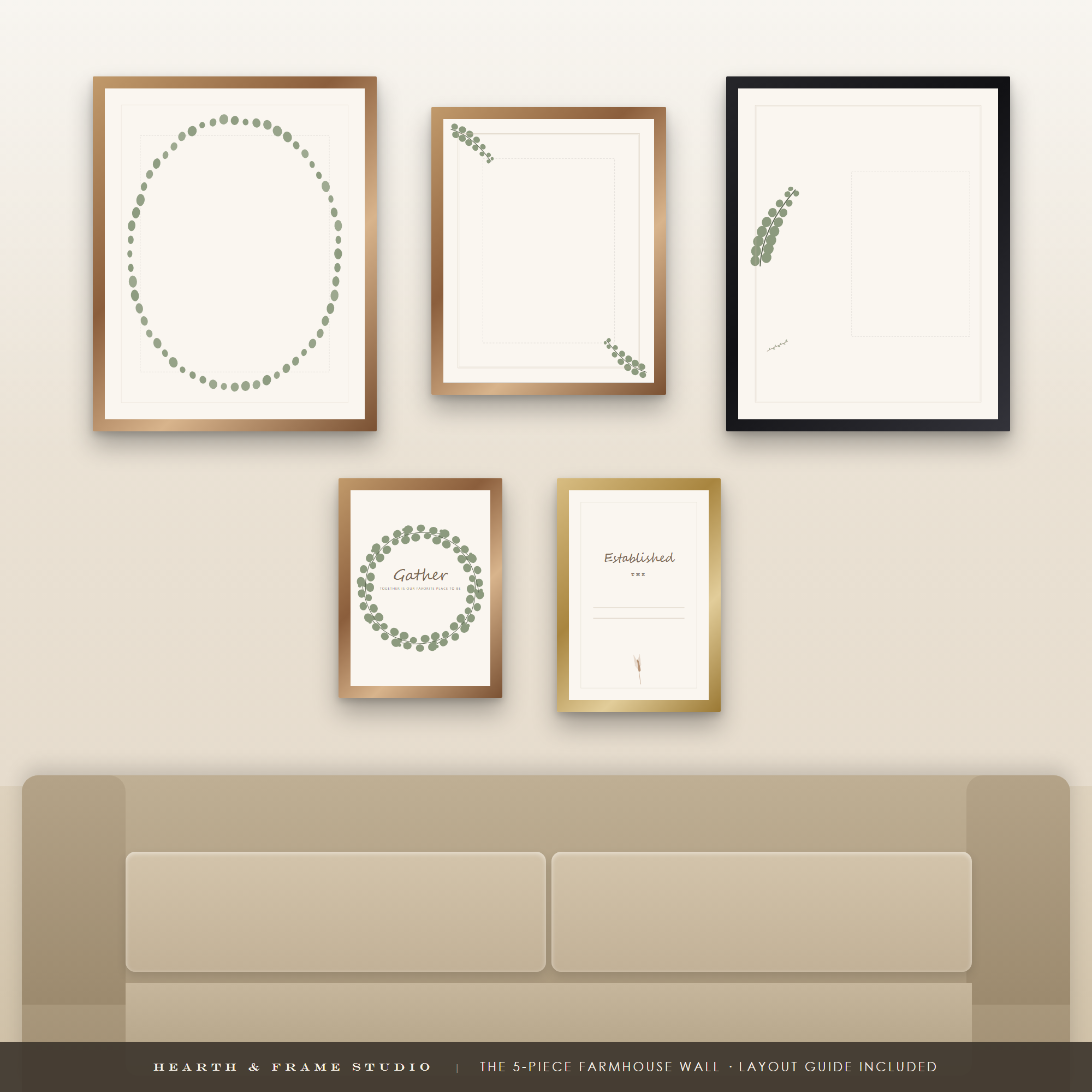
How to get your family's pictures off your phone and onto your walls — without a custom framing bill.
There's a frame shop in the strip mall next to our grocery store. Last spring I walked in with an 8×10 of my three kids on the back steps — all squinting, my youngest mid-blink, the exact kind of photo you only love because it's yours.
The man behind the counter was perfectly nice about it. He measured. He nodded. He turned the frame around to show me the back and said, "So you'd want a mat, and you'd want UV glass, and with this profile here, you're looking at about $180."
For one photo. Of my own children. That I had already paid eleven dollars to have printed at the pharmacy.
I said thank you, took my 8×10 back, and left. And then I drove home and looked at my living room wall — the big one, the one above the sofa — which had been blank for the two years we'd lived in that house.
Here's what finally occurred to me, and it's the thing I want to tell you before anything else in this post:
We are the most photographed generation of parents in human history, and we display fewer pictures of our families than our grandparents did.
My grandmother had maybe forty photographs of her life. Thirty of them were framed. Mine are on a phone that lives in my back pocket, in a camera roll with 11,000 images and a search bar I never use.
That gap isn't a character flaw. It's a math problem — and a cost problem. Let me show you the fix.
First, the vocabulary, because nobody tells you this
Almost everybody walks into a frame shop and says "I need the frame." What actually costs the money is the mat — the stiff board that sits inside the frame with a window cut out of it, so your photo appears surrounded by white space instead of jammed against the glass.
A mat is the entire reason a $12 photo looks like it belongs in a hotel lobby.
And here's the part that made me a little bit angry: a mat is a rectangle of heavy paper with a rectangle cut out of the middle. Four straight cuts. That's it. That's the whole product. The "custom" in custom framing is mostly the labor of measuring your picture and cutting four lines.
So I started cutting them myself. Which brings us to the money.
The math, laid out plain
| Custom frame shop | Ready-made frame + printable mat | |
|---|---|---|
| Frame | $85–$220 | $8–$25 (Target, IKEA, Amazon, HomeGoods, thrift) |
| Mat | $20–$60 each | About $0.40 of cardstock |
| Glass | $30–$70 | Included with the frame |
| Per additional photo | Full price again | Reprint and recut |
| Turnaround | 1–2 weeks | An evening |
I'm not saying a good framer isn't worth it. For a wedding portrait you'll hand down, hire the framer. But for the fourteen photos of your kids at various ages that you want marching up the stairwell? Paying $180 a piece is how the wall stays empty forever.
The wall doesn't stay empty because you don't care. It stays empty because the number is absurd.
The wall rules, so it doesn't look like a dorm room
Before you buy a single frame, know these four numbers. They're the difference between "gallery wall" and "we just kept hanging things."
- Center the art at 57 to 60 inches from the floor. That's average standing eye level in the US. Almost everyone hangs pictures too high, usually because they eyeball it while standing right next to the wall.
- Leave 2 to 3 inches between frames. Any less and the grouping reads as one blurry mass. Any more and the pieces stop feeling related.
- Above a sofa, hang the bottom edge 8 to 10 inches above the sofa back. Not 18. The instinct to go high is almost always wrong.
- Total width should be about two-thirds to three-quarters the width of the furniture below it. A 7-foot sofa wants roughly 4.5 to 5.5 feet of art.
One more: hang, then sit down and look at it. Sit on the actual sofa. Look at the wall from where you'll actually see it. Adjust.
The trick that saves your walls
Cut rectangles out of newspaper, tape them to the wall with painter's tape, and live with the arrangement for a day. Every single mistake I've made on a wall, I made because I trusted my eye instead of a piece of newspaper.
Now — the walls actually worth building
This is the part I care about. Not the techniques. The walls that mean something in a family's actual life. Here are six I've built, or watched friends build, that are worth the evening.
1. The stairwell timeline
One photo per year, climbing the stairs in order. Same spot in the house for the photo if you can manage it — the front porch, the back steps, the same tree.
You don't notice the change month to month. You notice it at year seven, walking down the stairs at 6:40 in the morning, when the four-year-old at the bottom of the staircase has somehow become the ten-year-old at the top. Every family I know who's done this says the same thing: it's the single best thing on their walls.
Start with whatever years you have. Nobody's grading you on the missing ones.
2. The first-day-of-school porch wall
Backpack on, front step, squinting into the sun — and the sign with the grade and the year, because in nine years you will absolutely not remember which year was second grade.
Every August, parents buy a chalkboard sign or print one out, the photo gets taken, and then the photo goes into the camera roll with all the others. Print it. Frame it. Hang it beside last year's. This costs you one cardstock sheet a year and it will be the thing your kid photographs when they move out.
3. Grandma's wall of grandkids
My mother has seven grandchildren. For most of a decade, the photo she had of all seven together was from 2016 and everyone's eyes were closed.
If you're the one with the printer, this is the highest-return gift you can give a grandparent: one frame per grandchild, matching, cheap, on her wall. It doesn't need to be archival. It needs to be current. Update it every year around the holidays and she will show it to every single person who walks through her door, which is the entire point of being a grandparent.
4. The holiday card wall
Every December, the cards arrive and go in a basket, and then into the recycling in January, and then those people's kids are strangers to you by spring.
Frame the good ones. Or better — put up one row of small frames in a hallway and swap in a new round of cards every December. Same frames, new faces, year after year. It costs nothing after the first year, and it turns thirty pieces of mail into an actual wall.
5. The one for somebody who's gone
This is the frame you'll be glad you made and least want to make. A grandparent, a parent, a dog who made it to fifteen. One good photo, one line of dates, hung where you'll pass it.
I put one up for my father-in-law two years after he died, because I couldn't do it in the first year. There's no wrong time. But there's a particular comfort in walking past someone every morning on your way to the coffee maker, and that comfort is available to you tonight, for about a dollar of paper.
6. The blended-family tree
If your family doesn't look like a 1950s catalog — steps, halves, bonus kids, two houses — the standard "Mom, Dad, two kids" frame layout is quietly telling you your family is wrong.
It isn't. Make a tree with room for everyone: his kids, her kids, the ones you share, the grandparents who show up. Write the names in yourself. Hang it where the kids can see it, because they're the ones who need to see it.
What I actually used
I got tired of cutting mats by hand for fourteen frames in one weekend, so I went looking for something I could just print and cut, in the sizes that actually match the frames Americans own.
What I ended up buying is a set of 72 printable frame mats and photo inserts — you print them on cardstock, cut the window, and drop them into standard frames you already own. It's called The Family Frame Collection — though honestly, most of the value is in the pattern, not the specific shop. Whatever you use, here's what matters:
- It's sized to standard US frames. 8×10, 11×14, 16×20, 5×7, 4×6, 10×10, 12×12. Not European sizes, not "close enough."
- The window matches a real photo size. An 8×10 mat with a 5×7 window means you print your 5×7 and it fits. No guessing.
- You get PDFs, so it prints at exactly 100%. Set your printer to "Actual Size," never "Fit to page." Fit to page will shrink it four percent and now the mat's too small for the frame. This is the single most common mistake and it will ruin a sheet every time.
- Matte cardstock, 80 to 100 lb. Not glossy photo paper. Glossy fights the cut edge and catches every bit of glare from a window.
The stacking order, since everyone asks
Back of the frame first, then work forward:
- Backing board
- Your photo, taped or corner-mounted so it's centered
- The mat, face down over it
- Glass
- Frame lip
Two things worth knowing: cut the window from the back of the sheet so any pencil marks end up hidden, and cut each line about 1/16 inch past the corner into the waste — that's how you get sharp corners instead of fuzzy ones.
Frequently asked, briefly
Do I need a craft knife? Yes, and a metal ruler and a cutting mat. About $12 total, and you'll use them for the rest of your life. Scissors work on very small windows and look like it.
Can I do this if I rent? The frames are the same whether you rent or own. Use Command strips rated for the weight, and keep the mats — they'll fit the next place too.
How long does one frame take? Twenty minutes, first one. Ten minutes after that.
What if I don't have a printer? Any print shop or photo lab will print a PDF. Ask them for 100%, actual size, on 80 lb or heavier matte cardstock.
Will my photos get damaged? Not if you use photo corners or acid-free tape. Don't use Scotch tape on the face of a photo — it will yellow and it will take the emulsion with it.
The last thing
The wall above my sofa is not blank anymore. There are nine frames on it now. Mine cost about $60 in frames from IKEA and Target, a pack of cardstock, and one Sunday afternoon with the game on in the background.
The photo of my three kids squinting on the back steps is the one on the left. It's the exact photo the frame shop wanted $180 to frame.
My youngest is eleven now. In that picture he's four.
Go take the picture off your phone. Print it. Hang it where you'll walk past it tomorrow morning.
Not ready to buy anything yet? Download three designs free and test one page on your own printer first. That's the whole trick — not the frames, not the mat, just the decision to stop waiting for the perfect wall and put the pictures up.
If you are decorating a room rather than a hallway, there are two more in this series: the wall behind your desk and what to do with the pile of kids' art.
Have a wall you finally finished, or one you're still avoiding? Tell me about it — I want to know what's on your staircase. Send me a note and I'll read every one.