Resume Tips
Cover Letter Checklist for 2026: 40+ Checks Before You Hit Submit
Forty checks for the letter most people skip — opening, body, closing, tailoring, formatting, and the red flags that make a letter read like a template.
A resume says what you have done. A cover letter says why you are the one for this job, which is a different sentence, and the one most people never write.
In the U.S. market a cover letter is often optional — optional does not mean ignored. When forty people apply and three sent a letter, the three are the ones who sound like people. This list is what I would check before sending one.
How to Use This Checklist
Work through it before you submit. If you are short on time, four sections carry the weight: Header & Contact Information, Tailoring, Body Paragraphs and Proofreading. The rest is presentation, and presentation is easier to fix than a letter that was never tailored.
1. Header & Contact Information
- Your name at the top, matching the way it appears on your resume.
- A phone number with an area code.
- An email you check, and one that looks like a name rather than a handle.
- City and state. A full street address is optional, and usually unnecessary.
- A LinkedIn URL you have claimed and that resolves.
- Your portfolio or site, if it has anything to do with this job.
- The date, in the U.S. format the reader expects: Month Day, Year.
- The employer's name and address, spelled the way they spell them.
- A specific person's name, wherever you can find one. It is usually on the careers page or the LinkedIn listing.
- If there is genuinely no name to find: "Dear Hiring Manager" or "Dear [Department] Team". Never "To Whom It May Concern" when a name existed and you did not look.
2. Opening Paragraph
- The exact job title you are applying for, from the posting.
- Where you saw it. It costs one clause and proves you are applying to this job rather than pasting a letter into a form.
- Something about the company that is actually true. A line that would work for any employer reads as exactly what it is.
- No "I am writing to apply for". They can see that; it is the first line of the letter.
- A first sentence with an edge to it, something only you could have written.
- Two or three sentences. Anything longer is no longer an opening.
- Your resume, not repeated. The first paragraph is for the reason, not the record.
3. Body Paragraphs
- One paragraph on the experience that most closely matches this job. Not all of it; the closest.
- One paragraph on why this company, specifically. This is the paragraph most letters are missing.
- Specific examples rather than claims. "I rebuilt the onboarding flow" beats "I am passionate about user experience".
- Numbers where numbers exist: percentages, dollars, headcount, time saved.
- Your skills tied to the posting's requirements, in the posting's own words where the words are honest.
- What you would do for them, rather than what you want from them. The letter is not the place for the second one.
- Action verbs: Led, Built, Cut, Shipped, Negotiated. The same list as a resume, for the same reason.
- Pronouns kept light. "I" is allowed in a letter, unlike a resume, but a paragraph of them reads as a diary.
- Three to five sentences per paragraph. Four short paragraphs beat two dense ones.
- No sentences lifted from your resume word for word. The reader already has the resume.
- The company's mission, values or recent news, read rather than skimmed.
- One specific thing that made you want this: a product, a decision they made, something in their writing.
4. Closing Paragraph
- A thank-you for their time that does not sound automated.
- Your interest restated, in one sentence.
- The next step invited, plainly. "I would welcome the chance to talk" is enough.
- Contact details again if the header is far up the page.
- Two or three sentences. The closing is a door, not a summary.
- A sign-off that matches the letter's tone: "Sincerely", "Best regards", "Thank you".
- Your full name under it.
- Nothing too casual for the company's own style. "Cheers" is fine at a brewery and odd at a law firm.
5. Tailoring
- Written for this job, not adapted from the last one.
- The description's keywords in it, where you mean them.
- The company named, correctly. A letter with the wrong company name in it is worse than no letter.
- The team or department named, if you know which one this role sits in.
- Sentences cut if they would fit any employer in the country. That is the test: could this line be in a letter to anyone else?
- The most relevant experience brought forward, even if it is not the most recent.
- Gaps or transitions addressed in a line, without apology, if they are visible.
- The company's website and LinkedIn read before writing, so the details are current.
- A template edited until it stopped being a template.
6. Formatting & Tone
- One page, or less. Nobody has read a second page of a cover letter.
- The same font as the resume. They are one application, not two documents.
- Font size between 10 and 12 points.
- Margins between half an inch and an inch.
- Paragraphs left-aligned, not justified.
- Standard business letter formatting, which has not changed in a long time and does not need to.
- A tone that is professional without being stiff. Write it the way you would speak to the person in an interview.
- No slang, emojis or text abbreviations.
- No jokes that could land wrong. You are not in the room to explain one.
- American English for American employers.
- Active voice more often than passive. "I built" rather than "was responsible for building".
- Short enough to scan in the time it takes to scroll once.
7. ATS & File Submission
- .docx or .pdf, unless the employer names a format. Then that one.
- A file name containing your name: FirstName_LastName_CoverLetter.pdf.
- No tables, text boxes, images or columns. Same reason as the resume: the parser stops.
- Standard section formatting throughout.
- Keywords from the description, used naturally.
- No keyword stuffing. A wall of terms reads as a bot on both ends.
- The file opened after saving, to check it is not corrupted and not the wrong draft.
- The correct file attached. The cover letter attached where the resume should be is a common and quiet mistake.
- Every instruction in the posting followed, including the awkward ones.
- A copy kept. You will want it if they call.
8. Proofreading
- Spell check run.
- The letter read out loud, all the way through. You will hear the missing word.
- Grammar and punctuation checked.
- Verb tenses checked, especially where you describe past and present roles in the same paragraph.
- The company's name spelled correctly, including any capital letter in the middle of it.
- The hiring manager's name spelled correctly. Getting this wrong undoes the effort of finding it.
- Your own contact information verified, digit by digit.
- Missing and repeated words checked. There is always one.
- Someone else has read it. A second reader catches what your fifth pass cannot.
- The date checked, and current.
- The job title quoted exactly as the posting writes it.
- Placeholder text from the template removed. "[Company Name]" has been sent to real employers.
9. Red Flags to Avoid
- No typos or spelling errors
- No wrong company name
- No wrong job title
- No "To Whom It May Concern" when a name was available
- No paragraphs over five sentences
- No restating the resume word for word
- No paragraph about what you want
- No complaints about a previous employer
- No personal stories that have nothing to do with the job
- No file name like "coverletter_final_final.pdf"
- No missing contact information
- No stiff, outdated phrasing
10. Final Submission Check
- The letter is about this job, this company, this posting.
- The letter and the resume sound like the same person, laid out the same way.
- Your LinkedIn profile is current.
- Your portfolio links open, and open to the right page.
- Both file names are professional.
- Your contact information is correct in both documents.
- The email carrying it is proofread too.
- It went in before the deadline, not at 11pm on it.
- A copy of the posting saved for the interview.
What To Do With This
A cover letter is not a summary of your resume. It is the one page where you get to make an argument, in your own voice, that you are the right person for this job rather than a plausible one for any job.
Twenty minutes of tailoring does more than an hour of rewriting. Do it once, properly, and the next letter starts from something real.
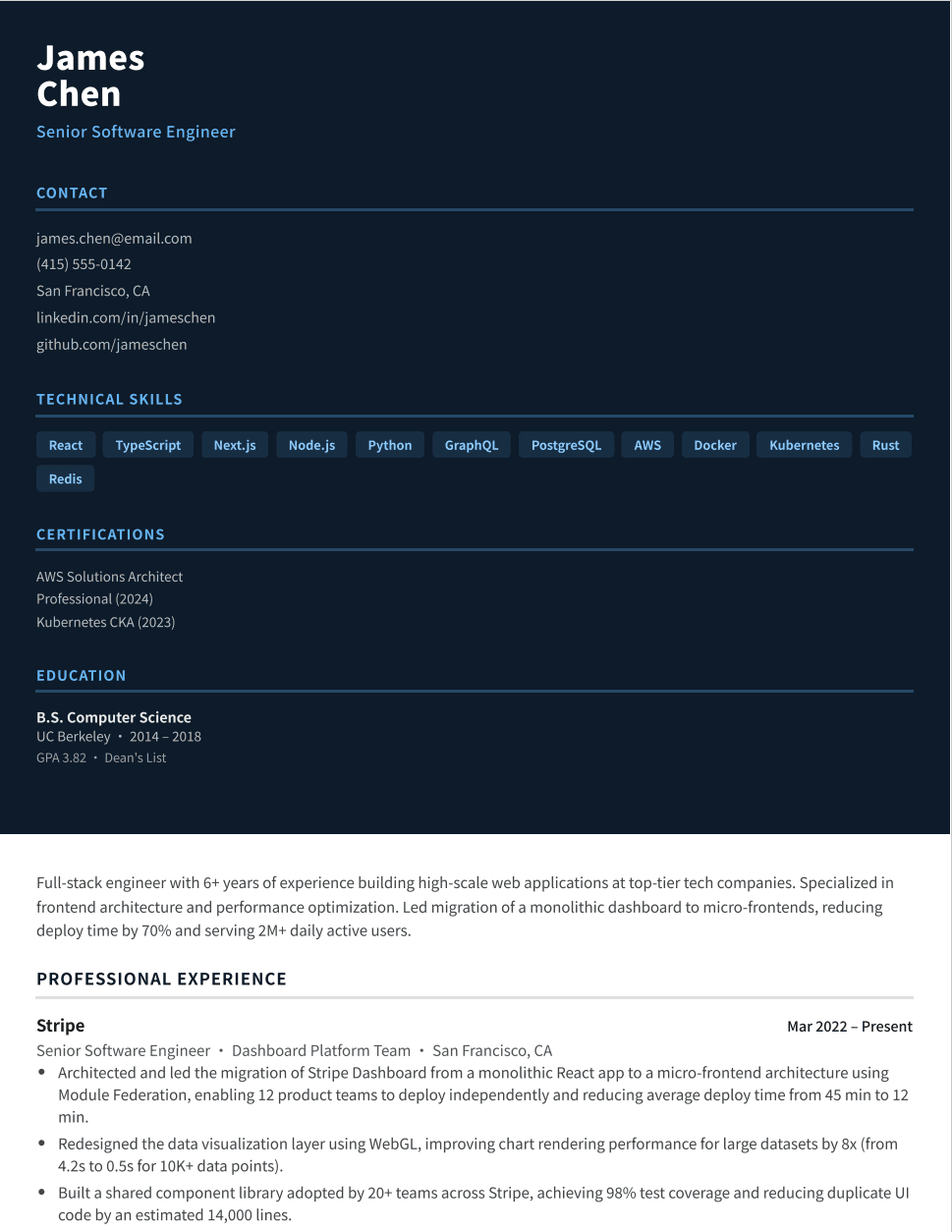
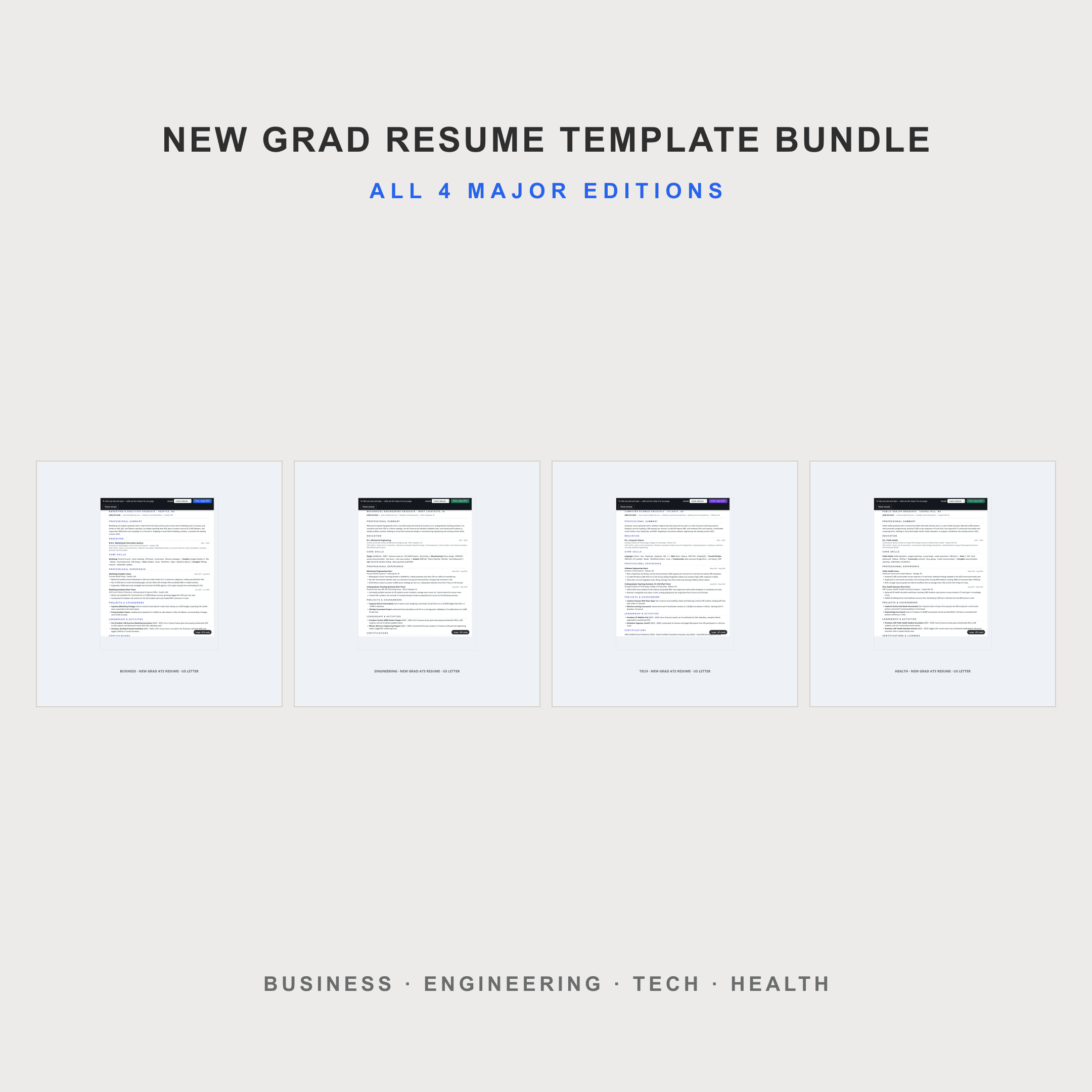
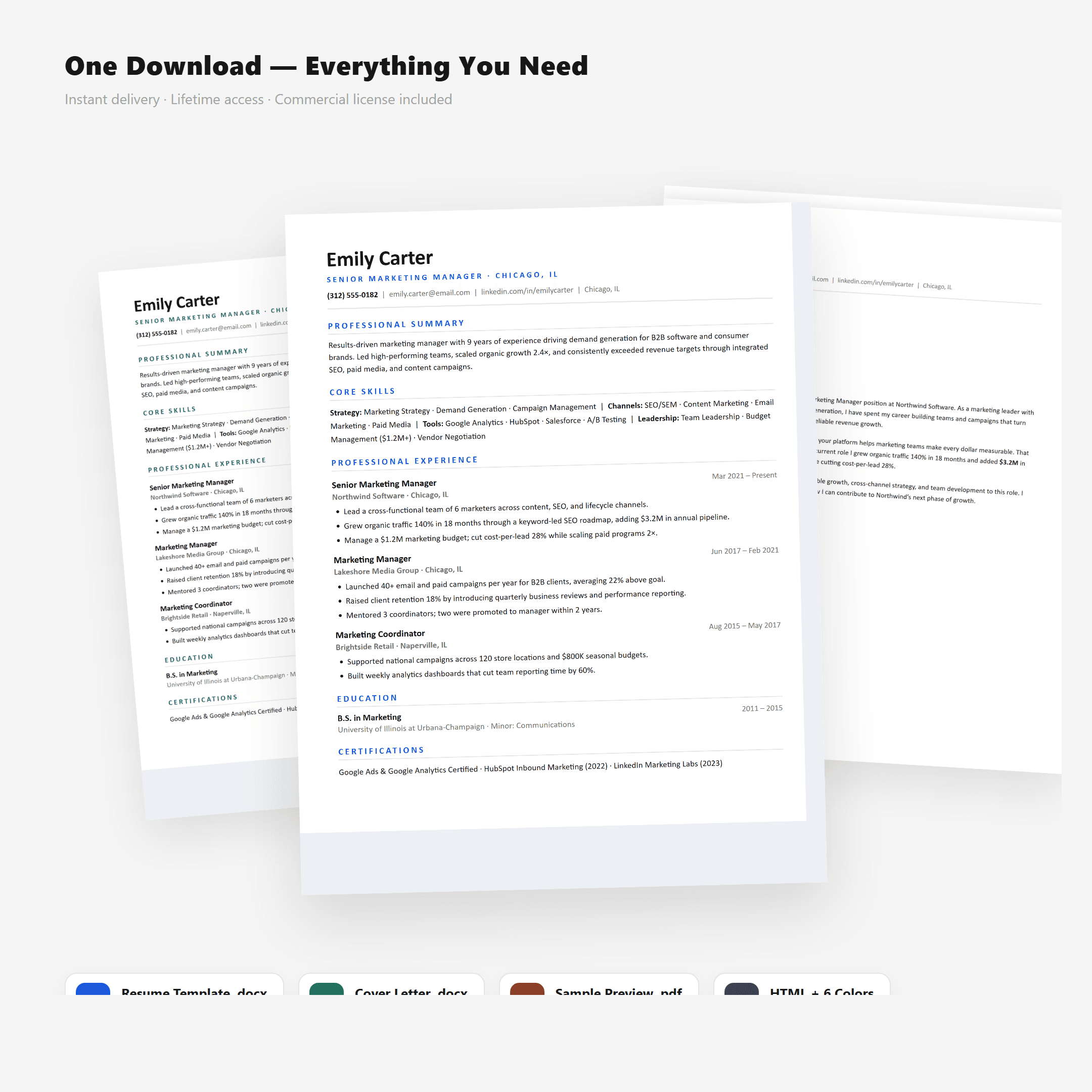
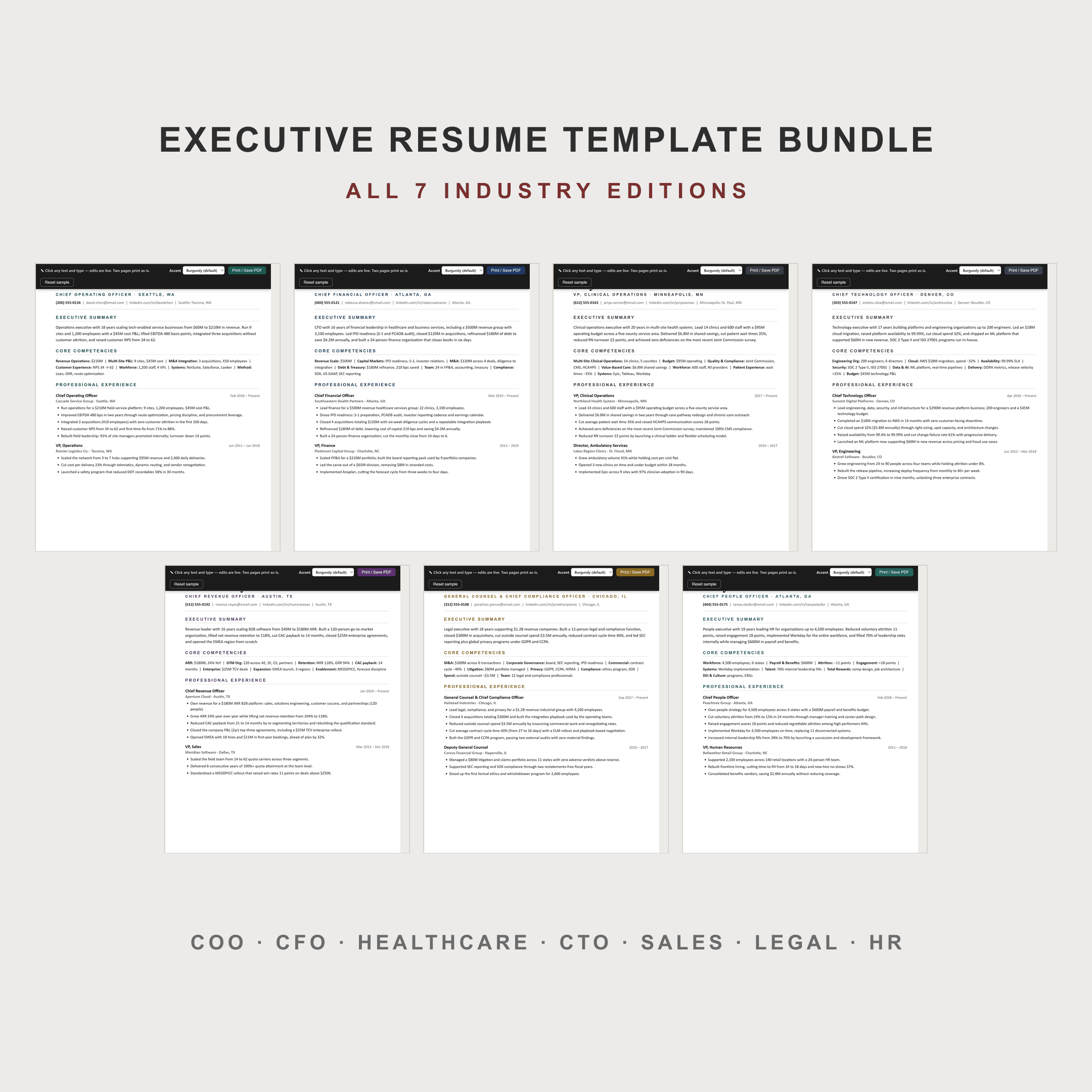
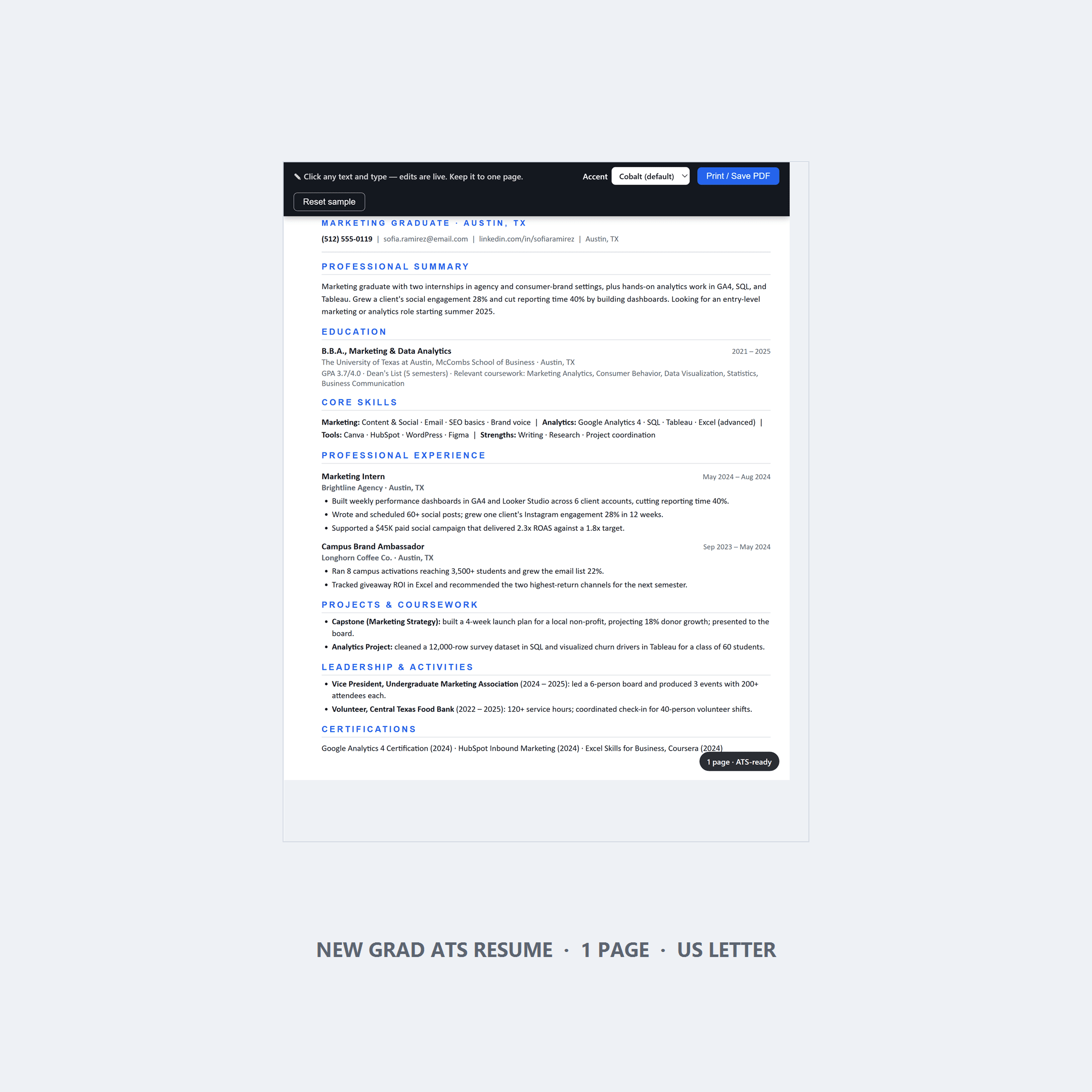
Need a resume to go with it? The Minimal ATS Resume Template is the one-page version, the New Grad template is built for students and first jobs, and the Executive template is the two-page format for director level and up. Every one of them comes with a matching cover letter template.
Next in this series: the resume checklist, the interview checklist, and, if you are early in your career, the new grad job search guide.
KEEP READING
Resume Writing Checklist for 2026: 50+ Checks Before You Hit Submit
Fifty checks to run before you hit submit — contact details, structure, ATS formatting, proofreading, and the red flags that quietly sink a resume.
How to Display Kids' Art Without Losing Your Mind
The pile of kids’ art is not a storage problem, it is a decision problem. One test for what goes on the wall, and a rotation that takes fifteen minutes.
The Wall Behind Your Desk Is the Only Part of Your House Your Coworkers See
The wall behind your desk is the only part of your house your coworkers see. Four rules, three layouts, and the webcam mistakes that make it worse.
The Frame Shop Quoted Me $180 for One Photo. Here's What I Did Instead.
Custom framing costs $180 a photo — which is why the wall stays empty. How to print your own frame mats and hang a family photo wall in one weekend.
How to Get Your First Job After College Without Losing Your Mind
A funny, actually useful U.S. job search guide for new grads: the resume robot, LinkedIn, referrals, interviews, and a 30-day plan.
SHOP THE LOOK
Who we are — the studio, and the reason it exists.
Stay in the loop
New products and the occasional free sample, now and then.